Struct anira_engine_load_info#
-
struct anira_engine_load_info#
Collaboration diagram for anira_engine_load_info:
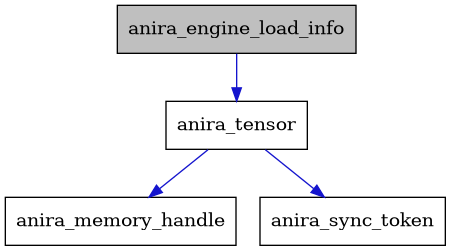
What anira_engine_load_fn receives: the model to load and the tensors the engine will be handed. Tier 2, struct_size first, no implicit padding (LP64 96 bytes, ILP32 64); anira fills it, so it carries no struct_id. Valid for the duration of the call: the engine copies what it keeps and never keeps the pointers.
Public Members
-
uint32_t struct_size#
sizeof(anira_engine_load_info) of the library.
-
uint32_t row#
This engine’s entry in the variant’s models[] list: the row whose path or bytes the engine loads (anira_model_config_model_path, anira_model_config_model_bytes).
-
const anira_model_config *model#
The variant, anira’s own copy: read through the config getters during the call, never kept.
-
const anira_tensor *inputs#
num_inputs templates in slot order, State tensors included: the ENGINE side of every input, the spec’s dtype and the extents in the engine’s order (the entry’s layout applied) at the pinned window, all-zero strides, ANIRA_DOMAIN_HOST, no memory (never dereferenced). What process will be handed, minus the data.
-
const anira_tensor *outputs#
num_outputs templates, likewise.
-
const char *const *input_names#
num_inputs strings: the name each input slot binds to, the entry’s tensors record where it names the slot, else the canonical name.
-
const char *const *output_names#
num_outputs strings, likewise.
-
uint32_t num_inputs#
The tensors of the model’s input list, State tensors included.
-
uint32_t num_outputs#
The tensors of the model’s output list, State tensors included.
-
uint32_t instances#
The shared call slots of this loaded model: the process calls that may run at once on them, each on its own instance below this count (anira_engine_ctx.instance), the model’s max_instances for a stateless model (ANIRA_INSTANCES_AUTO resolved to the inference pool’s thread count, at least 1), at most the pool’s thread count; 0 for a model declared ANIRA_MODEL_STATEFUL or with a declared State pair, whose handlers are exclusive and run on what their prepare builds (ANIRA_PREPARE_EXCLUSIVE), never on a shared slot.
-
uint32_t provider#
anira_provider: the provider this load is for, ANIRA_PROVIDER_CUSTOM beside a provider_id. A provider is part of the loaded model: two providers of one model load twice; a load that cannot serve the one it is asked for returns ANIRA_ERROR_NOT_SUPPORTED.
-
const char *provider_id#
NULL for a provider the enum names; the name of a custom provider in the engine’s vocabulary (provider ANIRA_PROVIDER_CUSTOM; an entry of the descriptor’s providers list), valid until the callback returns.
-
const char *const *option_keys#
num_options option names: the provider options of this backend, the set of the context config’s “provider_options” extension for the engine on this provider, handed to an engine whose descriptor lists “context:provider_options” (a set for an engine that does not list it is refused at anira_handler_create); NULL with a count of 0 for none. A tail field: the options are part of the loaded model, two contexts with different options for one backend load twice.
-
const char *const *option_values#
num_options option values, one per key, NUL-terminated.
-
uint32_t num_options#
The number of key/value pairs.
-
uint32_t reserved#
0.
-
uint32_t struct_size#