Struct anira::PlanQuery#
-
struct PlanQuery#
Collaboration diagram for anira::PlanQuery:
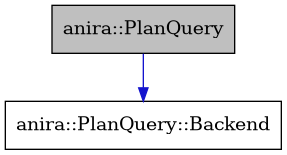
What PlanReport::find looks for, the anira_plan_query of anira_plan_report_find as an aggregate: every field names one property a plan must have, or matches every plan.
report.find({.backend = {.engine = ANIRA_ENGINE_ONNXRUNTIME}})finds the first plan on ONNX Runtime,report.find({.backend = {.provider = ANIRA_PROVIDER_COREML}})the first on Core ML whatever its engine,report.find({.backend = {.engine = ANIRA_ENGINE_CUSTOM, .engine_id = "com.example.engine"}})the first on that custom engine.Public Members
-
uint32_t variant = ANIRA_VARIANT_ANY#
The variant of the inference stage; ANIRA_VARIANT_ANY matches every variant.
-
struct Backend#
The backend axes; NONE matches every engine or every provider. A custom engine is ANIRA_ENGINE_CUSTOM with its engine_id, a custom provider ANIRA_PROVIDER_CUSTOM with its provider_id (the pair rule: an id exactly beside its CUSTOM value).
Public Members
-
EngineKind engine = ANIRA_ENGINE_NONE#
-
Provider provider = ANIRA_PROVIDER_NONE#
-
const char *engine_id = nullptr#
-
const char *provider_id = nullptr#
-
EngineKind engine = ANIRA_ENGINE_NONE#
-
uint32_t variant = ANIRA_VARIANT_ANY#